
Reggae music is more than just catchy beats. It reflects the rich history and culture of the Caribbean islands.
Exploring the reggae genre reveals a rhythmic heartbeat loved by fans worldwide for decades. Knowing the reggae roots helps us appreciate its evolution.
We’re about to dive into the musical and social landscapes that created this global phenomenon. Join us as we explore the history that shaped this iconic style.
Key Takeaways
- The genre acts as a mirror for Caribbean cultural history.
- Rhythmic patterns define the unique sound of this musical style.
- Global popularity has grown steadily over several decades.
- Historical context is vital for understanding modern musical evolution.
- The movement represents a significant social and artistic landscape.
The Evolution of Reggae: A Historical Overview
The story of reggae starts in mid-century Jamaica. It’s a tale of reggae roots mixed with local and international music. This blend shaped the sound we know today.
To understand reggae history, we must see how these elements came together. This mix created a sound that would soon win hearts worldwide.
Early Influences and Cultural Context
Jamaica’s music was shaped by folk music like mento. It gave the rhythm. Then, jazz and rhythm and blues added depth and energy.
People in Jamaica listened to American radio. This introduced new sounds. They were then reinterpreted with a Caribbean twist, creating a new musical identity.
Key Artists and Their Impact
As reggae evolved, artists like Bob Marley emerged. They slowed down the pace and emphasized bass. This made the music more soulful.
These artists focused on social issues and spirituality. Their music reached people from all walks of life, thanks to its strong groove.
The Emergence of Sound Systems
Mobile sound systems were key in reggae culture. They brought music to the streets, outside of radio. This changed how music was shared.
Sound systems tested new music and techniques. This grassroots approach kept the genre exciting and new.
The Birth of Ska: Reggae’s Predecessor
Before reggae music became popular, a fast-paced sound called ska swept Jamaica. In the late 1950s and early 1960s, musicians mixed Caribbean mento and calypso with jazz and rhythm and blues. This mix created a lively sound that reflected Jamaica’s newfound freedom.
Characteristics of Ska Music
Ska is known for its infectious offbeat rhythm, or “skank.” This rhythm, often played on guitar or piano, contrasts sharply with the steady bass. It makes you want to move.
The genre also features prominent horn sections. Trumpets, trombones, and saxophones carry the melody, adding brightness and energy. Together, these elements make ska both sophisticated and fun to dance to.
Prominent Ska Artists
The Skatalites were key in shaping ska. They were the backing band for many hits, known for their technical skill. Their work helped define the genre’s complex sound.
Prince Buster and The Wailers, in their early days, also played a big role. They made dance halls cultural centers. As one music historian said:
“Ska was the sound of freedom, a fast-paced heartbeat for a country finding its own voice on the global stage.”
The Transition from Ska to Rocksteady
In the mid-1960s, ska’s fast pace began to slow down. Musicians started to explore slower, soulful sounds, leading to rocksteady. This change was partly due to Jamaica’s hot summer, making fast dances too tiring.
The basslines grew heavier and more melodic, while horns took a backseat to vocals. This shift allowed for deeper lyrics and social commentary. It paved the way for reggae music and the next wave of Jamaican sounds.
Rocksteady: The Bridge to Reggae
The transition from ska’s frantic energy to the reggae genre‘s laid-back groove found its middle ground in rocksteady. This movement emerged in the mid-1960s, changing Jamaican music forever.
Defining Rocksteady and Its Features
Rocksteady is known for its slower tempo and a shift in musical focus. Musicians started to focus on deep, melodic bass lines. They also reduced the fast horn sections seen in earlier styles.
This era valued vocal harmonies and soulful delivery. By slowing down, artists made room for complex arrangements. These arrangements would later shape the reggae genre.
“Rocksteady was the sound of a nation finding its own rhythm, slowing down to let the message sink in.”
Noteworthy Rocksteady Musicians
Iconic artists like Alton Ellis helped shape this sound. He is often called the “Godfather of Rocksteady.” His vocal sophistication set a new standard.
Groups like The Paragons and The Heptones also played a key role. They blended smooth harmonies with tight rhythms. This blueprint guided future musicians.
Cultural Significance in Jamaica
In the late 1960s, Jamaica saw big social and political changes. The music mirrored these changes, moving from upbeat optimism to more introspective and socially conscious themes.
This time was crucial for sound engineers and producers. They experimented with recording techniques. These experiments highlighted the bass and drums, creating the reggae genre‘s rhythmic backbone.
Reggae: Defining Characteristics and Themes
Exploring reggae roots reveals a mix of rhythm and social commentary. It’s more than a catchy tune; it’s a way to express culture and identity. Its unique sound is loved by people everywhere.
Prominent Musical Elements
The core of reggae music is the bass guitar and drums. The bass is key, giving a deep sound. This sound holds the music together.
Guitar work in reggae is special too. It uses the “skank” technique, playing chords on the off-beat. This creates a lively yet calm vibe.
Lyrical Themes in Reggae Songs
The lyrics of reggae songs are its heart. They often talk about social justice, equality, and fighting against oppression. These songs speak for those who are not heard.
Reggae also talks about spiritual growth and unity. Artists share messages of love and togetherness. This makes the music more than just songs; it’s a call for change.
The Role of Rhythm and Beat
The rhythm of reggae is unique. It uses the one-drop rhythm, focusing on the third beat. This creates a special feel.
This rhythm gives the music a laid-back yet steady feel. It connects with listeners on a deep level. It shows how simple can be powerful.
The Global Influence of Reggae Music
Reggae music has spread far beyond its Caribbean roots. It has become a universal language. This global expansion shows the power of its message and rhythm.
Reggae’s Spread Beyond Jamaica
Caribbean migrants brought their music to cities like London, New York, and Toronto. These places introduced reggae to the world. Radio and local shops helped spread its sound to diverse audiences.
Collaborations with Other Genres
Reggae has become versatile, teaming up with artists from all genres. You’ll hear its basslines and chords in rock, pop, and hip-hop. These creative collaborations let musicians try new things while staying true to reggae.
Reggae Festivals Around the World
International events have boosted community and creativity. Sites like ReggaeTownMusic.com showcase the genre’s lasting impact. These reggae festivals are where tradition meets modernity.
At these festivals, people from all over come together. Live music strengthens the global reggae culture. These events are key to keeping reggae alive and growing for future fans.
Legendary Reggae Artists Who Shaped the Genre
The history of reggae is shaped by visionaries who made local sounds global. These musicians created a cultural identity that crosses borders. By looking at the lives of these reggae artists, we understand how the movement grew from small beginnings to a global force.
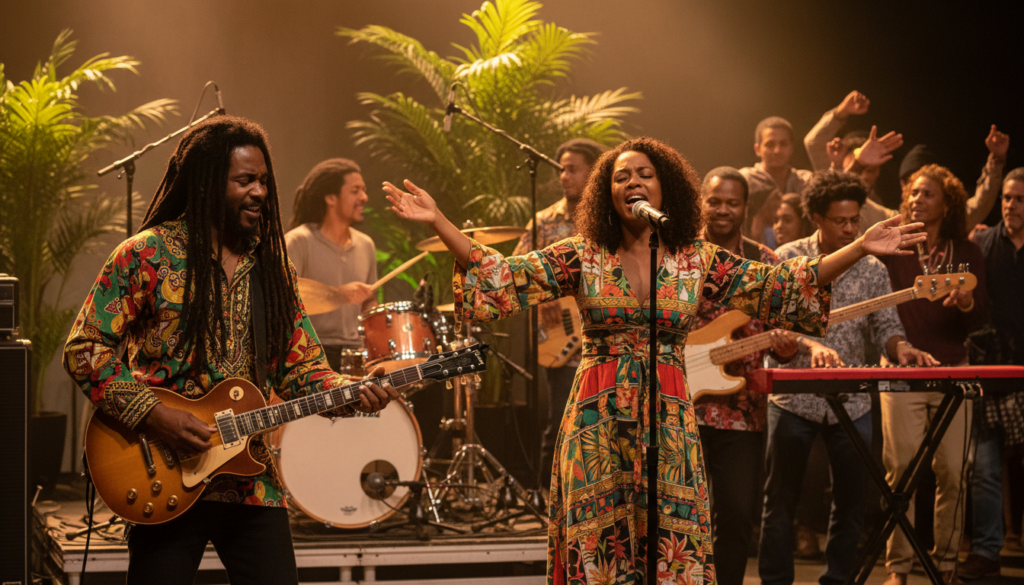
Bob Marley: The Face of Reggae
Bob Marley is the most known figure in reggae history. He mixed spiritual messages with catchy rhythms, becoming a global icon. His work highlighted the struggles and hopes of Jamaicans worldwide.
His impact is unmatched, turning the reggae genre into a tool for change. Even years after his death, his music still tops charts and inspires many. He embodies the heart and soul of the movement.
Peter Tosh and Bunny Wailer: Pioneers in Their Own Right
While Marley gets most of the attention, Peter Tosh and Bunny Wailer are crucial. As part of The Wailers, they shaped the early sound. They laid the groundwork for the group’s success in its early years.
Both artists had successful solo careers, expanding the music’s reach. Their focus on authentic storytelling and activism defined the era’s rebellious spirit. Without them, the music scene would be vastly different today.
Contemporary Reggae Artists
The legacy of these pioneers lives on through today’s reggae artists. They mix new sounds with tradition, keeping the genre alive. They connect the past with the present, making reggae relevant today.
By combining traditional beats with modern production, these artists break new ground. Their work shows that reggae genre is a dynamic art form that grows with each year. They honor legends while forging their own paths in reggae history.
Reggae’s Political and Social Messages
Reggae is more than just music; it’s a voice for the oppressed and a reflection of society. It emerged as a response to inequality, giving a platform to the silenced.
Music as a Tool for Activism
Reggae bands have used their music to speak out against poverty, corruption, and human rights issues. They mixed politics with melodies, reaching people worldwide.
This made the music industry a powerful engine for social change. It made listeners think about fairness and equality.
Reggae and the Rastafarian Movement
The Rastafarian movement is at the heart of reggae. It celebrates African identity, justice, and Haile Selassie I’s divinity.
Songwriters found a moral compass in these beliefs. Their lyrics yearned for freedom and opposed colonialism that oppressed Jamaicans.
Songs That Changed the Narrative
Looking back, some reggae classics changed how we see the world. They didn’t just entertain; they taught us about ghetto life and the need for unity.
These timeless anthems challenged the norm, becoming symbols of freedom. Today, they inspire activists to use music for change and love.
Documentaries and Films About Reggae History
Documentaries are key for learning about global music’s roots. They show how a sound changed the world through visual stories. These films keep the past alive, sharing pioneers’ stories with today’s listeners.
Notable Films to Watch
Some films are crucial for understanding reggae history. The Harder They Come gives a raw look at Jamaica’s music scene in the early 1970s. Marley offers a deep dive into the life of reggae’s biggest icon.
These reggae classics are more than movies. They are historical records. They show the spirit of a time that shaped a cultural movement. Watching them helps us see the social and political backdrop of this unique sound.
How Documentaries Capture Reggae Culture
Documentaries show reggae culture through interviews and old footage. They share artists’ stories, giving us a glimpse into their world. This makes legends more relatable.
Live performances are also key. They take us back to where the music first resonated. Seeing the crowd’s energy shows why this music spread globally.
The Role of Film in Reggae Appreciation
Films help us appreciate reggae more. Seeing the context behind songs adds depth. It turns music into a powerful narrative of struggle and hope.
These visual tools help fans connect with the music’s history. They are valuable for both long-time fans and newcomers. These films keep the genre’s legacy alive today.
The Future of Reggae: Trends and Innovations
The spirit of reggae music is still alive and kicking. It’s entering a new era of creativity. We see a path where old traditions meet new sounds, reaching people all over the world.
Modern Fusion and Style
Artists like Lila Iké are at the forefront. They mix old roots with new sounds. This keeps reggae music exciting while staying true to its roots.
Growth in Live Experiences
Reggae festivals in the US are getting more popular. They give both old and new artists a chance to meet fans. This shows the music’s growing appeal.
The Next Generation
Young musicians are adding their own twist to reggae. They bring in their own cultural experiences. This keeps the music fresh and alive for the future. Check out these new artists and help keep reggae alive.